

A brighter smile can transform your confidence, but the wrong approach to teeth whitening can damage your teeth, waste your money, or leave you with disappointing results.
Every week at The Harrogate Clinic, we see patients who’ve made expensive mistakes with teeth whitening. Some have burned their gums with illegal products bought online. Others have spent hundreds on supermarket kits that barely made a difference. A few have permanently damaged their enamel trying DIY whitening methods they found on social media.
The good news? All of these problems are completely avoidable when you know what to watch out for.
Here are the seven most common teeth whitening mistakes we see, and how to avoid them.
1. Using Illegal Whitening Products from Beauty Salons
This is the most dangerous mistake you can make, and unfortunately it’s becoming more common.
UK law is very clear: only GDC registered dental professionals can legally provide teeth whitening using products containing more than 0.1% hydrogen peroxide. Dentists can use up to 6% hydrogen peroxide. Beauty therapists, hairdressers, and mobile whitening services cannot legally offer teeth whitening at all.
Despite this, a recent BBC investigation found illegal whitening products containing up to 53% hydrogen peroxide being sold on social media and handed over in car parks. That’s nearly nine times stronger than what dentists are legally allowed to use, and 530 times the legal limit for over the counter products.
One woman from Lancaster paid £65 for whitening at a beauty salon and ended up losing four teeth. She told the BBC the pain started during the treatment and got progressively worse. It took years and tens of thousands of pounds in dental work to repair the damage. The beautician was prosecuted and ordered to pay just £250 in compensation, a fraction of what the patient lost.
The investigation revealed beauticians purchasing fraudulent qualification certificates for £300 that consisted of nothing more than WhatsApp messages and a pre signed certificate. These operators then advertised themselves as “qualified” whitening providers, often claiming their treatments were legal.
They’re not. And the consequences can be catastrophic. Chemical burns to your gums, permanent tooth sensitivity, enamel damage that can never be reversed, and in severe cases, pulp necrosis where the nerve inside your tooth dies.
If someone is offering teeth whitening for £50 to £100 at a beauty salon, nail bar, hair salon, or via mobile service, they’re breaking the law. The low price reflects the fact that they’re using dangerous, unregulated products and have no proper training.
2. Buying Whitening Products Online Without Checking Legality
Those ultra strong whitening kits advertised on social media might look tempting, but many contain illegal concentrations of bleaching agents.
In the UK, any product you can legally buy over the counter or online can only contain a maximum of 0.1% hydrogen peroxide. Anything stronger must be supplied by a dentist following an examination.
The BBC investigation found products openly advertised online containing 35% carbamide peroxide, equivalent to roughly 12% hydrogen peroxide. That’s 120 times the legal limit for home use and double what dentists are permitted to use.
Laboratory testing at the University of Lancashire found some gels contained up to 53% hydrogen peroxide. Dr Shalini Kanagasingam, who conducted the tests, described them as extremely dangerous. She warned that using such high concentrations without professional monitoring could cause irreversible damage and chemical burns.
Even products that claim to be legal often aren’t. Some arrive in unmarked plastic bags with no safety instructions, usage guidelines, or ingredient lists. Others are mislabelled or use loopholes to avoid detection.
If you’re buying whitening products online, check they’re from a reputable UK dental supplier and verify the hydrogen peroxide content. Better yet, get your whitening products directly from your dentist. At The Harrogate Clinic, our Enlighten teeth whitening home kit (£589) includes everything you need with guaranteed safety and results.
3. Skipping the Dental Examination Before Whitening

Whitening products work by penetrating your tooth enamel. If you have cavities, cracked teeth, or receding gums, those whitening agents can reach the sensitive inner layers of your tooth and cause severe pain.
Many people buy whitening strips or kits and start using them immediately without having their teeth checked first. This is a mistake that can turn a cosmetic treatment into a painful dental emergency.
Whitening won’t work properly on teeth with untreated decay. The results will be patchy and uneven. Worse, the bleaching agents can aggravate existing dental problems, making them significantly more painful and expensive to treat.
If you have gum disease, whitening can worsen the inflammation and cause your gums to recede further. If you have exposed tooth roots from recession, whitening those areas can be extremely sensitive and won’t produce the same colour change as the enamel covered parts of your teeth.
Before starting any whitening treatment, book a patient examination (£129 at The Harrogate Clinic). We’ll check for cavities, assess your gum health, and make sure whitening is safe for you. If we find any issues, we’ll treat them first so you can whiten safely and get better results.
It’s worth noting that whitening doesn’t work on fillings, crowns, or veneers. If you have visible restorations, we’ll discuss this during your examination so you understand how your final result will look.
4. Expecting Instant Results and Overusing Products
Teeth whitening is a gradual process. Professional treatments produce the fastest results, but even these take time to reach their full effect.
Many people make the mistake of using whitening products more frequently than recommended, thinking it will speed up results. It won’t. What it will do is increase tooth sensitivity, damage your enamel, and potentially cause gum irritation.
Whitening strips and gels are designed to be used for specific durations and frequencies. Using them longer or more often than the instructions state doesn’t make them work better. The active ingredients have already done their job within the recommended timeframe. Leaving them on longer just exposes your teeth and gums to unnecessary risk.
A study found that excessive whitening can weaken tooth enamel, making your teeth more susceptible to staining and damage in the future. Ironically, overwhitening can actually make your teeth look grey rather than white as the translucent enamel wears thin and the darker dentin beneath shows through.
Professional whitening with Enlighten at our clinic typically takes two weeks with custom trays used for specific periods each day. The treatment plan is carefully designed to maximize results while protecting your teeth. Trying to rush it by using the trays for longer periods won’t improve your outcome.
If you’re not seeing results from home whitening products after following the instructions for the recommended duration, the problem isn’t that you need to use them more. It’s that they’re either not strong enough for your type of staining, or your teeth need professional cleaning before whitening will work effectively.
5. Ignoring Tooth Sensitivity
Some sensitivity during whitening is normal, but severe or persistent pain is not. Ignoring it can lead to long term problems.
Teeth whitening temporarily makes your enamel more porous, which allows the bleaching agents to work but also makes your teeth more sensitive to temperature and pressure. This usually resolves within a few days of stopping treatment.
However, if you experience sharp, shooting pains, prolonged sensitivity that lasts hours after removing the whitening product, or pain severe enough to interrupt your sleep, something is wrong. This could indicate that the whitening product is too strong for your teeth, that you have underlying dental issues, or that you’re using the product incorrectly.
Many people push through the discomfort, thinking it’s a normal part of whitening. This is a mistake. Continuing to use whitening products when experiencing severe sensitivity can damage the nerve inside your tooth, potentially requiring root canal treatment.
If you develop sensitivity during whitening, stop the treatment and contact your dentist. At The Harrogate Clinic, we can assess what’s causing the problem and adjust your treatment accordingly. Sometimes switching to a lower concentration or using the product for shorter periods solves the issue. Other times, using a desensitizing gel before whitening makes the process more comfortable.
Professional whitening systems like Enlighten are specifically designed to minimize sensitivity while delivering results. The gradual approach and custom fitted trays reduce the risk of the bleaching gel contacting your gums or causing excessive sensitivity.
6. Eating and Drinking the Wrong Things After Whitening
The 48 hours immediately following whitening are crucial. Your teeth are more porous and vulnerable to staining during this period, yet many people don’t adjust their diet accordingly.
After whitening, avoid dark coloured beverages like coffee, tea, red wine, and cola. Skip foods that stain easily such as berries, tomato sauce, soy sauce, curry, and balsamic vinegar. Even things you might not think about, like dark chocolate or beetroot, can cause staining.
Smoking or vaping during this period is particularly problematic. The nicotine and tar can quickly reverse your whitening results and cause uneven discolouration.
Your teeth need time to remineralize after whitening. During this vulnerable period, stick to lighter coloured foods. Water is your best friend. If you do consume something that might stain, rinse your mouth with water immediately afterward.
Some patients tell us they maintain strict dietary restrictions for a day or two after whitening, then immediately return to their normal habits. While the first 48 hours are most critical, how you care for your teeth in the weeks following whitening affects how long your results last.
Regular coffee drinkers often find their whitening results fade faster than those who avoid staining beverages. This doesn’t mean you can never have coffee again, but being mindful about it and rinsing after helps maintain your results longer.
At The Harrogate Clinic, we provide detailed aftercare instructions with every whitening treatment, including specific dietary guidelines for the first week.
7. Neglecting Your Regular Oral Hygiene Routine
Some people assume that because they’re using whitening products, they can ease up on brushing and flossing. This is completely backward.
Good oral hygiene is essential for effective whitening results. Plaque buildup prevents whitening products from reaching your tooth enamel evenly, resulting in patchy, uneven whitening. If you have tartar accumulation, whitening products simply can’t penetrate through it.
Brushing twice daily and flossing once daily removes surface stains and keeps new stains from forming. This helps your whitening results last longer and prevents you from needing to whiten as frequently.
Many patients benefit from a professional hygiene appointment (Hollywood scale and polish from £99 at our clinic) before starting whitening. This removes any buildup and ensures the whitening products can work effectively across all tooth surfaces.
After whitening, maintaining excellent oral hygiene prevents new stains from forming and helps preserve your results. Using a whitening toothpaste can help maintain your shade between professional treatments, though these toothpastes alone won’t produce the dramatic results that professional whitening does.
Regular six monthly check ups and hygiene appointments ensure your teeth stay healthy and bright. Prevention is always easier and less expensive than correction.
The Smart Approach to Teeth Whitening
Avoiding these seven mistakes comes down to one simple principle: get professional guidance.
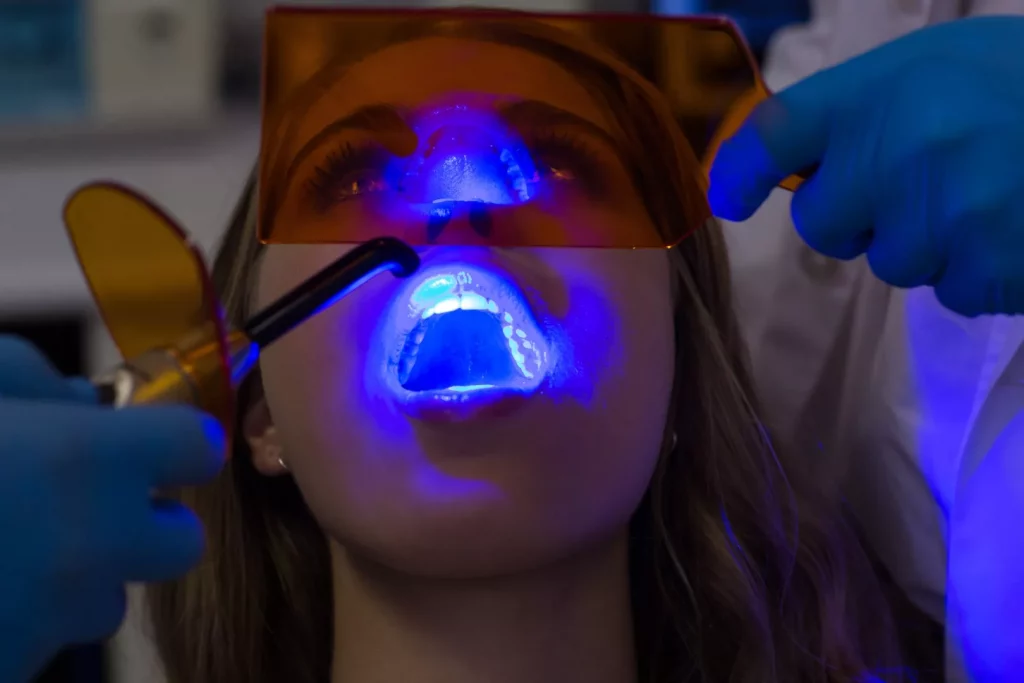
At The Harrogate Clinic, our Enlighten teeth whitening system (£589) includes a full examination, custom fitted trays made from iTero 3D scans, professional grade whitening gel at safe concentrations, and comprehensive aftercare support. The system is guaranteed to whiten teeth to shade B1, the lightest natural tooth shade.
We also offer in practice whitening sessions for patients who want faster results or prefer to have the treatment done entirely at the clinic.
Before starting any whitening treatment, book a consultation or patient examination (£129). We’ll assess your teeth, discuss your goals, and recommend the safest, most effective whitening option for your situation.
If you’ve already made one of these mistakes or experienced problems with whitening, don’t panic. Contact us on 01423 226702. We can assess any damage, treat sensitivity or other issues, and help you achieve the bright smile you want safely.
Remember, the cheapest option rarely delivers the best results when it comes to teeth whitening. Illegal products and untrained operators might save you money initially, but the potential cost in damaged teeth, pain, and corrective dental work far exceeds what you’d spend on professional treatment.
Your smile is worth investing in properly.